Network Pulse
Every natural event our monitoring has flagged near a submarine cable - newest first. Each entry shows what happened and whether our latency measurements detected any impact.
M5 earthquake · 68 km WNW of Catuday, Philippines

On June 28, 2026, a magnitude 5 earthquake struck approximately 68 km WNW of Catuday, Philippines.
The earthquake affected several submarine cable systems with landing points within 350km of the epicenter. Our monitoring indicates latency anomalies on three cables: the Asia-America Gateway (AAG) and SEA-H2X systems, which both land at La Union, Philippines, showing an average latency increase of about 236ms and 170ms respectively over a period of seven days. Additionally, the Asia United Gateway East (AUG East), landing at Luna, Philippines, experienced an increase in latency by approximately 190ms during the same timeframe. The Apricot, PLCN, and EAC-C2C cables, with landings further away from the epicenter, did not show significant changes in their average latencies.
M5 earthquake · 65 km W of Foxton Beach, New Zealand
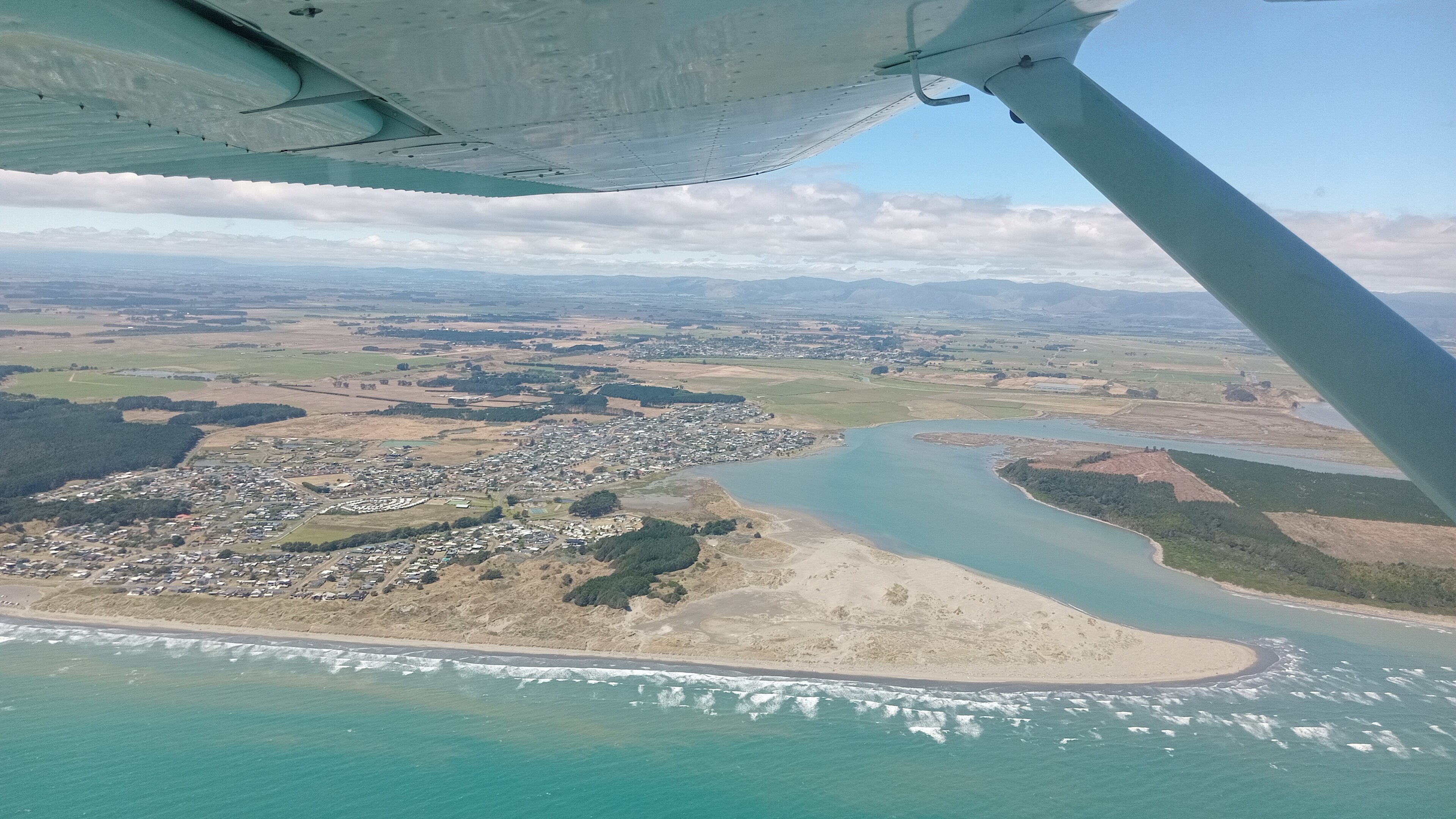
On June 28, 2026, a magnitude 5 earthquake struck approximately 65 km west of Foxton Beach, New Zealand. Our monitoring currently indicates no active alerts on the network but has identified three latency anomalies.
The Tasman Global Access (TGA) Cable, which lands at Raglan, New Zealand, is within the affected region. Our measurements show an average latency increase of about 29 milliseconds over seven days with seven checks conducted. No other cables in the area are currently showing significant issues as per our monitoring data.
M4.5 earthquake · 20 km W of Boca de Aroa, Venezuela

A magnitude 4.5 earthquake occurred on June 28, 2026, approximately 20 km west of Boca de Aroa, Venezuela.
The submarine cables with landing points within 350km of the earthquake include South American Crossing (SAC), Alonso de Ojeda, Amerigo Vespucci, ARCOS, EC Link, and Jerry Newton. Our latency measurements show that these cables have experienced minor fluctuations; SAC has an average latency increase of about 111ms over seven days, while the other cables ranging from 91ms to 165ms with varying check frequencies indicate similar but slightly different impacts. No active alerts are currently in place, and we continue to monitor the situation closely.
M5.9 earthquake · 50 km ENE of Noda, Japan

On June 27, 2026, a magnitude 5.9 earthquake struck approximately 50 km ENE of Noda, Japan.
The affected submarine cables within our monitoring range are the E2A and the Hokkaido-Sakhalin Cable System (HSCS). The E2A cable, which lands at Tomakomai, Japan, about 272km from the epicenter, showed an average latency increase of approximately 71ms over seven days with 24 checks. Similarly, the HSCS, landing at Ishikari, Japan, 336km from the event, experienced an average latency increase of around 331ms over a week with 10 checks. No active alerts were triggered by this seismic activity.
M5.9 earthquake · 192 km N of Metinaro, Timor Leste

A magnitude 5.9 earthquake occurred on June 27, 2026, approximately 192 km north of Metinaro, Timor Leste. This event is within a range that could potentially impact submarine cables.
Our monitoring indicates latency anomalies in the following cables: Asia Connect Cable-1 (ACC-1), Hawaiki Nui 1, Palapa Ring East, Kupang-Alor Cable Systems, and Indonesia Tengah Cable Systems, all of which have landing points within 350 km of the earthquake. ACC-1 and Hawaiki Nui 1, both landing in Dili, Timor-Leste, showed average latencies of approximately 222ms and 199ms respectively over the past week, with 82 and 78 checks per day. Palapa Ring East, Kupang-Alor Cable Systems, and Indonesia Tengah Cable Systems had measured latencies of around 261ms, 266ms, and 144ms respectively, with fewer daily checks at 51, 3, and 6 respectively over the same period. No active alerts were triggered by this event.
M4.9 earthquake · 13 km SSE of Clam Gulch, Alaska

A magnitude 4.9 earthquake occurred on June 27, 2026, approximately 13 km southeast of Clam Gulch, Alaska.
Our monitoring for this region shows two latency anomalies but no active alerts. There are currently no submarine cables with a landing point within 350 km of the affected area. As we continue to monitor the situation, there is no indication of any cable damage or significant impact on our network at this time.
M5.7 earthquake · 7 km N of Oshino, Japan

A magnitude 5.7 earthquake occurred on June 26, 2026, approximately 7 km north of Oshino, Japan. The seismic activity is within a 350km radius of several submarine cables that we monitor.
Our latency measurements indicate potential impacts on the following cables: FLAG Europe-Asia (FEA), Apricot, I-AM Cable, and Japan-Guam-Australia North (JGA-N). Latency for these cables has shown slight increases, with average measured latencies of ~196ms to ~201ms, based on 7-day checks. Currently, there are no active alerts, but we continue to monitor the situation closely.
M6.5 earthquake · 35 km SW of Balangonan, Philippines
A magnitude 6.5 earthquake occurred on June 26, 2026, approximately 35 km southwest of Balangonan, Philippines.
Our monitoring currently indicates that there are no active alerts, but we have observed latency anomalies affecting several submarine cables within the region. Specifically, the Apricot, Asia Connect Cable-1 (ACC-1), Bifrost, and SEA-US cables, which all land at Davao, Philippines, approximately 200 km from the earthquake's epicenter, are showing average latency increases of around 154ms, 223ms, 194ms, and 175ms respectively. These measurements were taken over a period of seven days with varying check frequencies ranging from 22 to 82 checks per day.
M5.8 earthquake · 3 km SE of Yokoshiba, Japan

On June 26, 2026, a M5.8 earthquake occurred approximately 3 km southeast of Yokoshiba, Japan.
Our monitoring indicates that five submarine cables with landing points within 350km of the event have shown latency anomalies: Tata TGN-Pacific (measured at ~195ms average latency), Asia United Gateway East (AUG East) (~201ms average), FLAG North Asia Loop/REACH North Asia Loop (~154ms average), EAC-C2C (~154ms average), and Pacific Crossing-1 (~133ms average). The Asia Direct Cable and Asia Pacific Gateway, both landing at Maruyama, Japan, showed measured latencies of ~88ms and ~155ms respectively. No active alerts were triggered by this event.
M5 earthquake · 93 km E of Union, Philippines

The submarine cable network remains stable with no anomalies detected over the past 24 hours. We conducted 1830 latency checks across 648 monitored cables and found zero issues, confirming the continued reliability of global connectivity.
A recent seismic event on June 26, 2026, near a M5 earthquake 93 km east of Union, Philippines, provided some context. However, none of our submarine cables with landing points within 350km were affected, and latency measurements indicate no impact to the network. The cables in range are operating normally, ensuring uninterrupted service for our users.
M4.7 earthquake · 36 km NNE of Kuji, Japan

The submarine cable network remains stable with 1848 latency checks conducted over the past 24 hours revealing no anomalies and zero active alerts. This indicates that the global network is operating smoothly.
As a reference point, a M4.7 earthquake occurred on June 25, 2026, approximately 36 km north-northeast of Kuji, Japan. The cables with landing points within 350km of this event - such as the E2A and Hokkaido-Sakhalin Cable System (HSCS) - are functioning normally according to our latency measurements, which show no impact from the seismic activity.
M7.5 earthquake · 28 km SE of Yumare, Venezuela
The submarine cable network remains stable with 1803 latency checks conducted over the past 24 hours showing no anomalies and zero active alerts. This indicates that the global network is operating smoothly without any disruptions. The recent M7.5 earthquake on June 25, 2026, near Yumare, Venezuela, has not impacted the cables within our monitoring range. All submarine cables with landing points within 350km of the event are functioning normally, as confirmed by our latency measurements which show no changes in performance.