Zafarana, Egypt
Landing Point · EG Egypt
Connected Cables
| Cable | Status |
|---|---|
| 2Africa | Active |
| Asia Africa Europe-1 (AAE-1) | Active |
| Europe India Gateway (EIG) | Active |
| India Europe Xpress (IEX) | Active |
| Middle East North Africa (MENA) Cable System/Gulf Bridge International | Planned |
| Middle East North Africa (MENA) Cable System/Gulf Bridge International | Active |
| PEACE Cable | Active |
| Red2Med | Active |
| SEACOM/Tata TGN-Eurasia | Active |
| SeaMeWe-5 | Active |
Live Performance
RTT measurements to this landing point from 2026-03-02 through 2026-09-06 - live ICMP round-trip time via our monitoring probes. Recomputed daily. ✓ No anomalies detected in the monitored period.
Measurement sources
| Probe | Location | Samples | Avg |
|---|---|---|---|
| #1014597 own probe | Tbilisi GE | 15 | 125.5 ms |
| #1014969 own probe | Jerusalem IL | 13 | 116.4 ms |
| #1014589 own probe | Almaty KZ | 10 | 185.0 ms |
| #1014473 own probe | Minsk BY | 9 | 127.5 ms |
| #6410 own probe | Sao Paulo BR | 6 | 251.7 ms |
| #6427 own probe | Sydney AU | 6 | 303.9 ms |
| #1015984 own probe | Balancer IL | 6 | 98.9 ms |
| #1015313 own probe | Sevastopol UA | 4 | 123.6 ms |
| #1015523 own probe | Moscow RU | 3 | 207.5 ms |
| #1033 | control probe | 1 | 294.2 ms |
| #4429 | control probe | 1 | 280.5 ms |
| #1015932 own probe | Odessa UA | 1 | 84.5 ms |
About Zafarana, Egypt
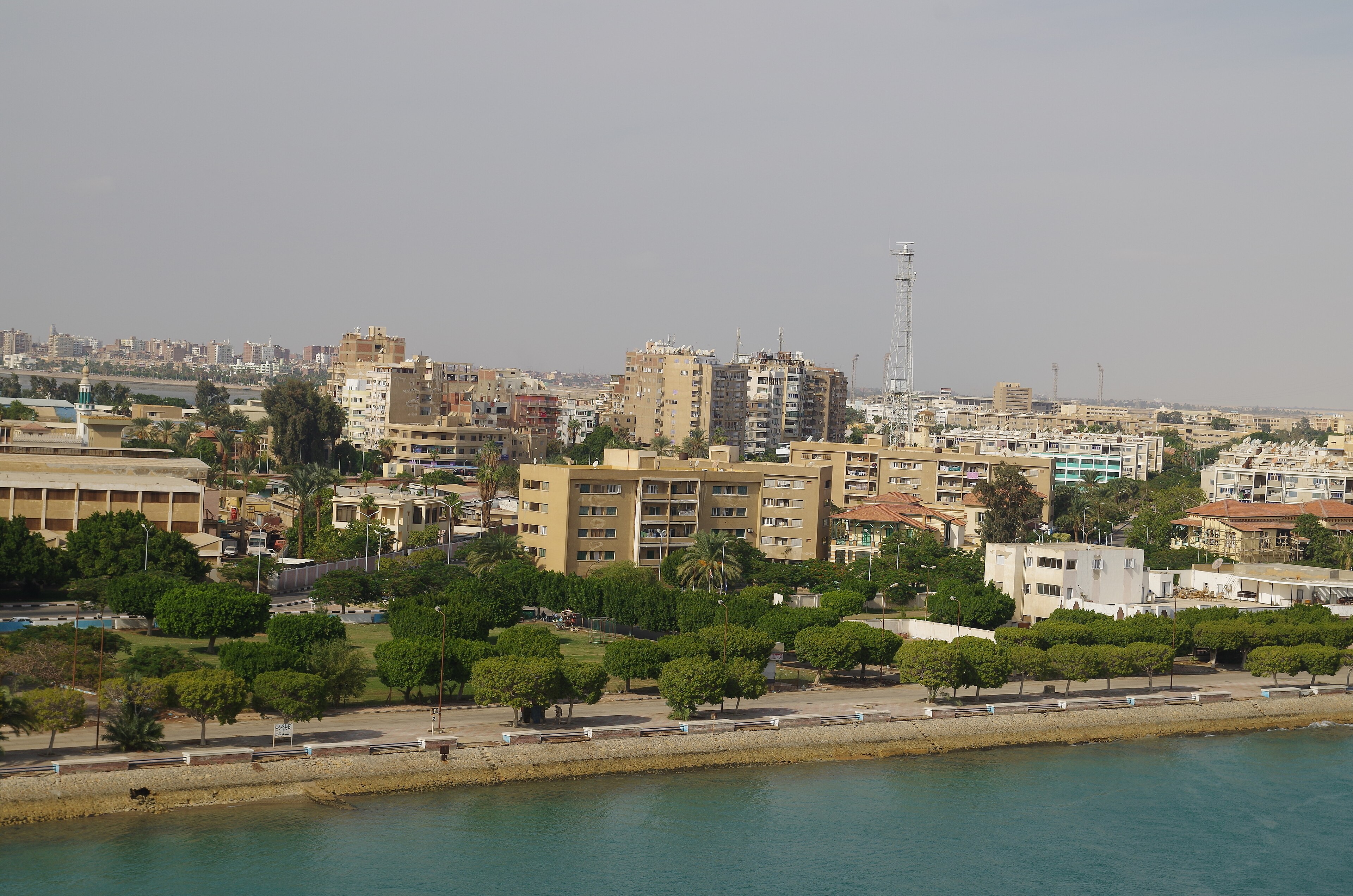
Position in regional infrastructure
Zafarana is a coastal town on the western shore of the Gulf of Suez in Egypt, at coordinates 29.116687°N, 32.649856°E. For submarine cable infrastructure, Zafarana is structurally critical: it is one of the principal Egyptian Red Sea entry points where Asia-Europe submarine cables make landfall after transiting the Suez Canal corridor. The Egyptian Red Sea coast — Zafarana, Suez, Ras Ghareb, Sidi Kerir, Port Said, Alexandria — collectively forms the bottleneck through which a substantial fraction of all Asia-Europe internet traffic passes. Nine major submarine cables land at Zafarana.
The Suez transit chokepoint is repeatedly cited as one of the most concentrated risks in global internet infrastructure: a fault in the Egyptian Red Sea cable corridor affects traffic between Europe, the Middle East, India, Southeast Asia and East Asia simultaneously, requiring expensive emergency rerouting via longer paths around Africa or via Russia/Mongolia overland. Zafarana's role as one of the cable concentration points within this corridor makes it both a key infrastructure asset and a documented systemic risk.
Submarine cables landing in Zafarana
2Africa is a 45,000 km submarine cable in service since 2024, owned by an 8-member consortium including Meta, Vodafone, Orange, Bayobab, China Mobile and others. From Zafarana it reaches a comprehensive African coastal route plus European, Middle Eastern and Indian landings — 46 total landings.
Asia Africa Europe-1 (AAE-1) is a 25,000 km submarine cable in service since 2017, owned by a 19-member consortium. From Zafarana it reaches Cambodia, China (Hong Kong), Djibouti, Egypt (Abu Talat), France (Marseille), Greece (Chania), India (Mumbai), Italy (Bari), Malaysia (Penang), Myanmar, Oman, Pakistan, Qatar, Saudi Arabia, Thailand, UAE (Fujairah), Vietnam, Yemen.
PEACE Cable is a 25,000 km submarine cable in service since 2022, owned by Peace Cable International Network Co. Ltd. From Zafarana it reaches Cyprus, Egypt (Abu Talat), France (Marseille), Kenya, Maldives, Malta, Pakistan, Saudi Arabia, Seychelles, Singapore, Somalia, Tunisia, UAE.
SeaMeWe-5 is a 20,000 km submarine cable in service since 2016. From Zafarana reaches Bangladesh, Djibouti, Egypt, France, Indonesia, Italy, Malaysia, Myanmar, Oman, Pakistan, Saudi Arabia, Singapore, Sri Lanka, Turkey, UAE, Yemen.
Europe India Gateway (EIG) is a 15,000 km submarine cable in service since 2011. From Zafarana it reaches UK, Portugal, Monaco, Egypt (Abu Talat), Gibraltar, Saudi Arabia, Djibouti, India, Libya, Oman, UAE.
India Europe Xpress (IEX) is a 9,775 km submarine cable scheduled for ready-for-service in 2026, owned by China Mobile and Reliance Jio. From Zafarana it will reach Djibouti, Egypt (Sidi Kerir), France (Marseille), Greece, India (Mumbai), Italy (Savona), Oman, Saudi Arabia.
Middle East North Africa (MENA) Cable System / Gulf Bridge International is an 8,000 km submarine cable in service since 2014, owned by Gulf Bridge International and Telecom Egypt. From Zafarana it reaches Egypt (Abu Talat), Italy (Mazara del Vallo), Oman, Saudi Arabia.
SEACOM/Tata TGN-Eurasia is a 15,000 km submarine cable in service since 2009, owned by SEACOM and Tata Communications. From Zafarana it reaches Djibouti, India (Mumbai), Kenya, Mozambique, Saudi Arabia, South Africa, Tanzania.
Red2Med is a 420 km submarine cable in service since 2023, owned by Telecom Egypt. Domestic Egyptian cable connecting Zafarana with Port Said, Ras Ghareb and Suez — providing intra-Egyptian Red Sea routing.
Connection topology and redundancy
Zafarana's nine cables provide enormous capacity for Asia-Europe transit via Suez but share the concentrated geographic risk of the Egyptian corridor. Failure scenarios at Zafarana itself are partially mitigated by the other Egyptian Red Sea landings (Suez, Sidi Kerir, Ras Ghareb, Abu Talat, Port Said) — most cables that land at Zafarana also have parallel landings at one or more of these Egyptian sites, providing landing-end diversity within Egypt.
The deeper systemic risk is that all Egyptian Red Sea landings depend on the Suez Canal corridor as the unique short-distance Asia-Europe path. Anchor incidents, terrorist attacks or regional conflict affecting this corridor have historically caused significant outages — most notably the 2022 cuts affecting AAE-1 and others. Operator concentration is also significant: Egyptian state operator Telecom Egypt is involved (or co-owns) in many of the cables landing at Zafarana, including 2Africa, MENA, Red2Med, and others.
Geography and coordinates
The Zafarana submarine cable landing sits at 29.116687°N, 32.649856°E (29°07'00"N, 32°38'59"E), on the western shore of the Gulf of Suez in Egypt. The Gulf of Suez is the northern arm of the Red Sea leading into the Suez Canal — submarine cables here use the Gulf as the underwater approach to either continue through the canal infrastructure (terrestrial fibre) or to land at Egyptian Red Sea coast manholes for onward terrestrial routing.
Frequently asked questions
What submarine cables land at Zafarana, Egypt?
Nine major submarine cables land at Zafarana: 2Africa (RFS 2024), AAE-1 (2017), PEACE Cable (2022), SeaMeWe-5 (2016), EIG (2011), IEX (planned 2026), MENA/GBI (2014), SEACOM/Tata TGN-Eurasia (2009), Red2Med (2023).
What are the coordinates of the Zafarana cable landing?
Zafarana cable landing is at 29.116687°N, 32.649856°E (29°07'00"N, 32°38'59"E), on the western shore of the Gulf of Suez in Egypt.
Why is Zafarana strategically important for submarine cables?
Zafarana is part of the Egyptian Red Sea cable corridor through which a substantial fraction of all Asia-Europe internet traffic passes. The Suez transit chokepoint is one of the most concentrated risks in global internet infrastructure, and Zafarana is one of the principal cable landing sites within this corridor.
When was the first submarine cable laid at Zafarana?
The earliest documented Zafarana landing in the GeoCables dataset is SEACOM/Tata TGN-Eurasia, in service since 2009. EIG followed in 2011, MENA/GBI in 2014, with subsequent cables progressively expanding Zafarana's role as a major Asia-Europe landing point.
Who operates the cables landing at Zafarana?
Zafarana operators include Egyptian state operator Telecom Egypt (involved in many cables including 2Africa, MENA, Red2Med), the multi-operator consortia of 2Africa (Meta, Vodafone, Orange, Bayobab and others), AAE-1 (19 members), SeaMeWe-5 (18 members), Peace Cable International, China Mobile and Reliance Jio (IEX), SEACOM and Tata Communications, and Gulf Bridge International.
What next: Zafarana, Egypt in the global directory of cable landing points; see surrounding routes on the interactive submarine cable map or follow live network monitoring.
Other Landing Points in Egypt
FAQ
Landing Point
- CountryEG Egypt
- Coordinates29.1167°N 32.6499°E
- Connected Cables10
See Real Cable Routes
View actual submarine cable routing from Zafarana, Egypt - with backbone nodes, distance calculations, and latency estimates
Open Calculator →