Takeshima, Japan
Landing Point · JP Japan
Connected Cables
| Cable | Status |
|---|---|
| Mishima Village | Active |
Live Performance
RTT measurements to this landing point from 2026-03-28 through 2026-09-08 - live ICMP round-trip time via our monitoring probes. Recomputed daily. ✓ No anomalies detected in the monitored period.
Measurement sources
| Probe | Location | Samples | Avg |
|---|---|---|---|
| #1014589 own probe | Almaty KZ | 4 | 294.5 ms |
| #1014597 own probe | Tbilisi GE | 4 | 283.5 ms |
| #1015523 own probe | Moscow RU | 4 | 245.8 ms |
| #1014473 own probe | Minsk BY | 3 | 301.2 ms |
| #1014969 own probe | Jerusalem IL | 3 | 288.5 ms |
| #6410 own probe | Sao Paulo BR | 2 | 266.0 ms |
| #7062 own probe | Cape Town ZA | 2 | 388.9 ms |
| #6487 own probe | Singapore SG | 1 | 79.7 ms |
| #19107 | control probe | 1 | 24.6 ms |
| #54893 | control probe | 1 | 22.4 ms |
| #1011110 | control probe | 1 | 17.1 ms |
About Takeshima, Japan
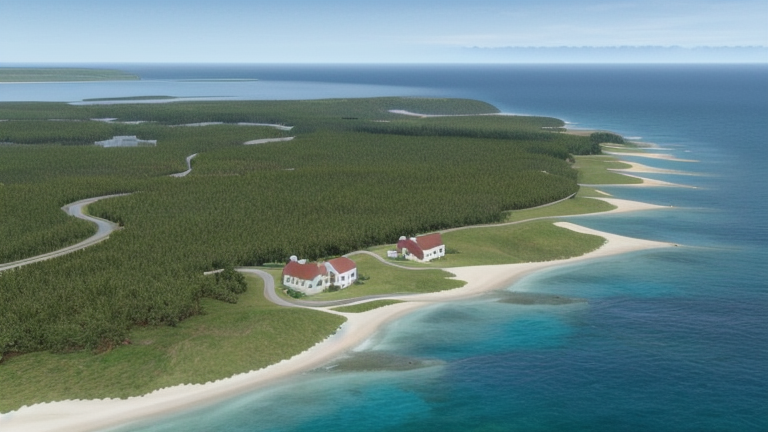
Takeshima, Japan: Submarine Cable Landing Point
Takeshima is a submarine cable landing point in Japan, situated in the context of Japan's broader network of 46 landing points that collectively host 38 submarine cables. As an island location, Takeshima relies on submarine cable connectivity to maintain telecommunications links with other parts of Japan. One submarine cable currently lands at Takeshima, connecting it to the domestic Japanese cable network.
The single cable serving Takeshima, the Mishima Village cable, operates entirely within Japan, making this a domestic inter-island connection rather than an intercontinental or international corridor. This intra-national routing reflects the geographic reality of Japan's scattered island territories, which require dedicated submarine cable infrastructure to maintain reliable communications links with the main Japanese islands.
Cables Landing at Takeshima
The Mishima Village cable is the sole submarine cable landing at Takeshima. Spanning 192 kilometres, it entered service in 2010 and was designated with draft status at that time. All endpoints on the Mishima Village cable are located within Japan, confirming its role as a domestic inter-island link. No additional technical specifications, such as capacity or fiber pair count, are available for this cable.
Regional Context
Among Japan's 46 submarine cable landing points, Takeshima sits at the lower end of the scale in terms of cable count, hosting a single cable compared to major hubs such as Shima with 11 cables, Maruyama with 9, and Chikura with 8. Even among mid-tier landing points like Minamiboso (4 cables) and Hachijo (3 cables), Takeshima's single cable places it among the more lightly served landing points in the country. It ranks within the top 72 percent of Japan's landing points by cable count, reflecting that a number of other locations across the country are similarly served by one cable or a small number of cables.
Network Role
Takeshima functions as a single-cable terminus within Japan's domestic submarine cable network. The Mishima Village cable, at 192 kilometres, provides a relatively short-haul connection entirely within Japanese territory, supporting island-to-island telecommunications rather than long-distance international routing. Japan's average submarine cable length across all landing points is 6,374 kilometres, which underscores how the Mishima Village cable serves a purely local connectivity purpose.
As a single-cable landing point dedicated to domestic inter-island service, Takeshima represents one of the more focused nodes in Japan's submarine cable graph — a point where infrastructure exists not for international traffic exchange but to ensure that a remote island location remains connected to the national network. Its presence in the broader Japanese cable topology illustrates how island nations must extend submarine cable infrastructure even to smaller and more remote territories to achieve comprehensive national connectivity.
What next: Takeshima, Japan in the global directory of cable landing points; see surrounding routes on the interactive submarine cable map or follow live network monitoring.
Other Landing Points in Japan
Landing Point
- CountryJP Japan
- Coordinates30.8102°N 130.4266°E
- Connected Cables1
See Real Cable Routes
View actual submarine cable routing from Takeshima, Japan - with backbone nodes, distance calculations, and latency estimates
Open Calculator →