Topolobampo, Mexico
Landing Point · MX Mexico
Connected Cables
| Cable | Status |
|---|---|
| Gulf of California Cable | Active |
Live Performance
RTT measurements to this landing point from 2026-03-05 through 2026-08-18 - live ICMP round-trip time via our monitoring probes. Recomputed daily. ✓ No anomalies detected in the monitored period.
Measurement sources
| Probe | Location | Samples | Avg |
|---|---|---|---|
| #1014473 own probe | Minsk BY | 6 | 154.0 ms |
| #1014589 own probe | Almaty KZ | 4 | 216.5 ms |
| #1014597 own probe | Tbilisi GE | 4 | 178.1 ms |
| #1015523 own probe | Moscow RU | 4 | 168.5 ms |
| #6410 own probe | Sao Paulo BR | 3 | 94.2 ms |
| #6487 own probe | Singapore SG | 3 | 202.2 ms |
| #1014969 own probe | Jerusalem IL | 3 | 174.0 ms |
| #7062 own probe | Cape Town ZA | 2 | 269.4 ms |
| #1015313 own probe | Sevastopol UA | 2 | 203.8 ms |
| #1015563 own probe | Saint Petersburg RU | 2 | 198.7 ms |
About Topolobampo, Mexico
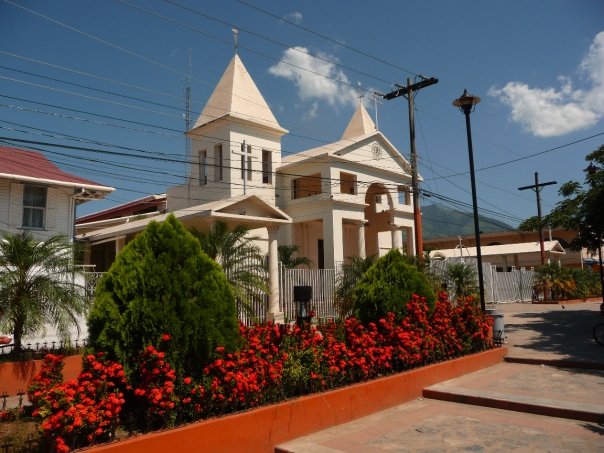
Topolobampo, Mexico: Submarine Cable Landing Point
Topolobampo is a port town situated on the Gulf of California in the municipality of Ahome, in the northwestern Mexican state of Sinaloa. Its position along the Gulf coastline places it within a network of submarine cable infrastructure that spans Mexico's Pacific and Gulf-facing shores. One submarine cable currently lands at Topolobampo, connecting it to the broader domestic cable network of Mexico.
The single cable landing here, the Gulf of California Cable, operates entirely within Mexico, making Topolobampo part of an intra-national submarine corridor rather than an intercontinental route. This positions the landing point as a domestic connectivity node, linking communities and infrastructure along the Gulf of California through undersea fiber rather than overland or transoceanic routes.
Cables Landing at Topolobampo
The Gulf of California Cable is the sole submarine cable landing at Topolobampo. Spanning approximately 250 kilometers, it reached ready-for-service status in 2019 and carries a draft status designation. All other endpoints on this cable are also located within Mexico, confirming its role as a domestic submarine link. The cable's relatively short length reflects the geography of the Gulf of California, where submarine routes offer a practical means of connecting settlements on opposing or distant shores of the enclosed gulf.
Regional Context
Within Mexico's submarine cable landscape, Topolobampo is one of eleven landing points across the country. Compared to peers such as Cancún, which hosts five cables, and Mazatlán, which hosts two, Topolobampo's single cable places it among the more modestly connected landing points in Mexico, alongside Isla de Cozumel, La Paz, Playa del Carmen, and Rosarito, each of which also serves a single cable. Mexico's submarine cable infrastructure spans an average cable length of 5,888 kilometers, underscoring how the short Gulf of California Cable is distinct from the longer international routes that characterize the country's other connections.
Network Role
Topolobampo functions as a single-cable terminus rather than a multi-cable hub, serving a domestic submarine route along the Gulf of California. The Gulf of California Cable connects points within Mexico over a 250-kilometer span, providing an undersea link suited to the geographic constraints of the region. This kind of intra-national route complements Mexico's broader cable network, which is dominated by longer international connections serving major coastal cities.
Within the Mexican submarine cable graph, Topolobampo represents the western Gulf coast's access to domestic fiber infrastructure, ensuring that smaller port communities in Sinaloa are not solely dependent on terrestrial routes for connectivity.
What next: Topolobampo, Mexico in the global directory of cable landing points; see surrounding routes on the interactive submarine cable map or follow live network monitoring.
Other Landing Points in Mexico
Landing Point
- CountryMX Mexico
- Coordinates25.6007°N 109.0504°W
- Connected Cables1
See Real Cable Routes
View actual submarine cable routing from Topolobampo, Mexico - with backbone nodes, distance calculations, and latency estimates
Open Calculator →