Itō, Japan
Landing Point · JP Japan
Connected Cables
| Cable | Status |
|---|---|
| Izu Islands Cable System | Active |
Live Performance
RTT measurements to this landing point from 2026-04-07 through 2026-09-04 - live ICMP round-trip time via our monitoring probes. Recomputed daily. ✓ No anomalies detected in the monitored period.
Measurement sources
| Probe | Location | Samples | Avg |
|---|---|---|---|
| #1014589 own probe | Almaty KZ | 5 | 324.8 ms |
| #1014473 own probe | Minsk BY | 4 | 283.8 ms |
| #1014597 own probe | Tbilisi GE | 4 | 284.8 ms |
| #1014969 own probe | Jerusalem IL | 4 | 287.9 ms |
| #1015313 own probe | Sevastopol UA | 2 | 292.9 ms |
| #1015523 own probe | Moscow RU | 2 | 240.5 ms |
| #6410 own probe | Sao Paulo BR | 1 | 284.0 ms |
| #22388 | control probe | 1 | 5.4 ms |
| #28714 | control probe | 1 | 5.1 ms |
| #62268 | control probe | 1 | 23.7 ms |
| #1015563 own probe | Saint Petersburg RU | 1 | 253.5 ms |
| #1015984 own probe | Balancer IL | 1 | 261.6 ms |
About Itō, Japan
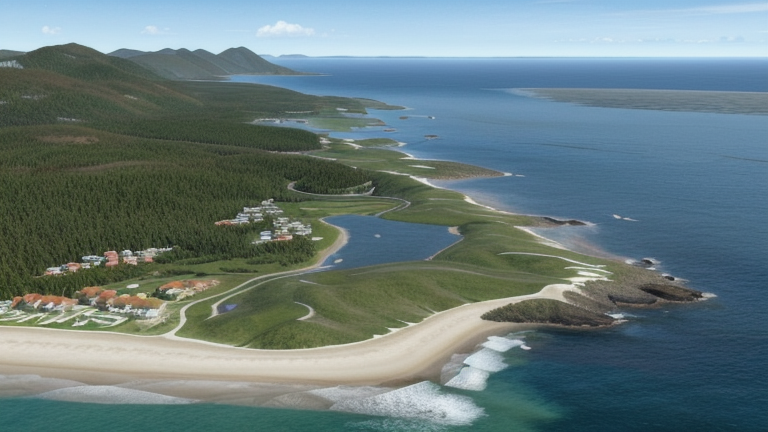
Itō, Japan: Submarine Cable Landing Point
Itō is a landing point located on the coast of Japan that serves as a terminus for submarine cable infrastructure connecting Japanese territory. As a submarine cable landing point, Itō participates in Japan's broader network of 46 landing points, which together host 38 submarine cables. One submarine cable lands at Itō, linking it to the domestic intra-national cable corridor that serves the Japanese island chain.
The single cable landing at Itō operates within a Japan-only corridor, meaning the connectivity it provides is oriented toward inter-island or domestic coastal linkages rather than intercontinental routes. This positions Itō as a domestically focused node within Japan's submarine cable geography, serving a distinct role from the country's major international gateway landing points.
Cables Landing at Itō
The Izu Islands Cable System is the sole submarine cable landing at Itō. This cable received its ready-for-service (RFS) date in 1996, making it one of the earlier cable systems in Japan's submarine infrastructure. All endpoints of the Izu Islands Cable System are located within Japan, confirming its function as a domestic inter-island connection rather than an international link. No cable length or additional technical specifications are available for this system.
Regional Context
Within Japan, Itō hosts fewer cables than most of its regional peers. Shima leads among Japanese landing points with 11 cables, followed by Maruyama with 9 and Chikura with 8. Hachijo, also serving inter-island connectivity in the region with 3 cables, represents a closer comparison to Itō's single-cable profile. Itō ranks in the top 72 percent of Japan's 46 landing points by cable count, reflecting that while it is among the less densely served landing points, it remains an active part of the national submarine cable map.
Network Role
Itō functions as a single-cable terminus within Japan's submarine cable network, with its one active system — the Izu Islands Cable System — dedicated entirely to domestic connectivity. This configuration positions Itō as a specialized node rather than a multi-cable hub, contributing to the intra-national segment of Japan's submarine infrastructure rather than to international or intercontinental routes.
In the broader submarine cable graph of Japan, landing points like Itō that host domestically oriented systems complement the larger international gateways by ensuring that connectivity extends to island communities and coastal areas beyond the reach of major transoceanic cables. Itō's role in sustaining that domestic inter-island corridor distinguishes it within Japan's distributed landing point network.
What next: Itō, Japan in the global directory of cable landing points; see surrounding routes on the interactive submarine cable map or follow live network monitoring.
Other Landing Points in Japan
Landing Point
- CountryJP Japan
- Coordinates34.9632°N 139.1048°E
- Connected Cables1
See Real Cable Routes
View actual submarine cable routing from Itō, Japan - with backbone nodes, distance calculations, and latency estimates
Open Calculator →