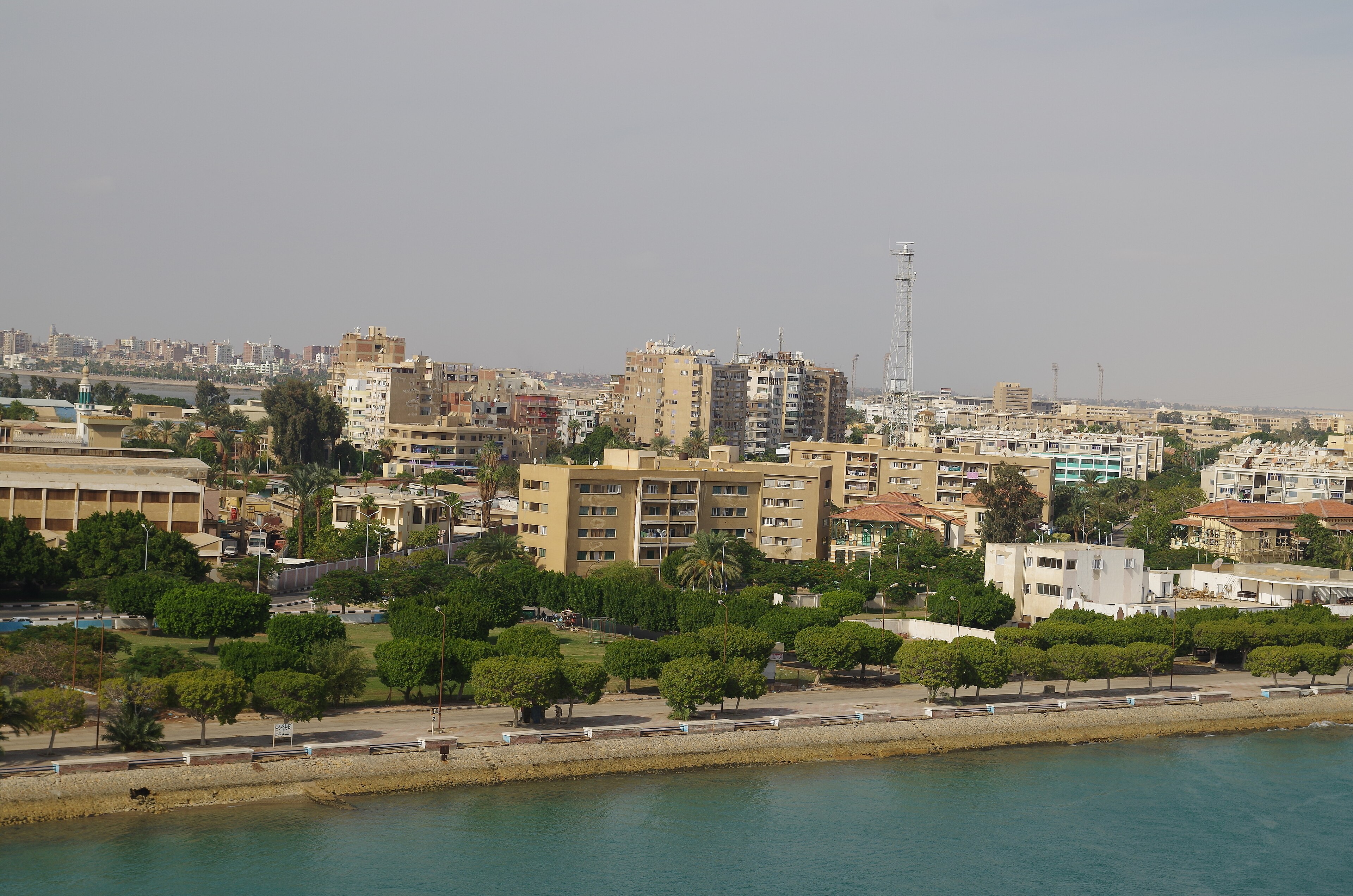
Jeddah, Saudi Arabia is a submarine cable landing point in Saudi Arabia (coordinates 21.4813°, 39.1828°). It serves 15 submarine cable systems, making it a major regional hub in Saudi Arabia's international connectivity infrastructure.
Jeddah lies on the Red Sea coast in the Hijaz region of Saudi Arabia. It serves as a governorate, is the largest city in Mecca Province, and, after the capital Riyadh, ranks as the country's second-largest city. Jeddah is the commercial center of the country. The exact date of its founding is unknown, but its prominence grew in 647 when the Caliph Uthman made it a travel hub serving Muslim travelers going to the holy city of Mecca for Islamic pilgrimage. Since that time, Jeddah has served as a gateway for millions of pilgrims arriving in Saudi Arabia. Wikipedia
Connected submarine cables
| Cable | RFS | Length | Owners |
|---|
| India Europe Xpress (IEX) | 2026 | 9,775 km | China Mobile, Reliance Jio Infocomm |
| 2Africa | 2024 | 45,000 km | Bayobab, China Mobile, Meta, … |
| Saudi Vision | 2023 | 1,071 km | center3 |
| PEACE Cable | 2022 | 25,000 km | Peace Cable International Network Co. Ltd. |
| Asia Africa Europe-1 (AAE-1) | 2017 | 25,000 km | China Unicom, Djibouti Telecom, Hyalroute, … |
| Middle East North Africa (MENA) Cable System/Gulf Bridge International | 2014 | 8,000 km | Gulf Bridge International, Telecom Egypt |
| Europe India Gateway (EIG) | 2011 | 15,000 km | AT&T, Altice Portugal, BT, … |
| Saudi Arabia-Sudan-2 (SAS-2) | 2011 | 330 km | Sudatel, center3 |
| IMEWE | 2010 | 12,091 km | Bharti Airtel, Ogero, Orange, … |
| SEACOM/Tata TGN-Eurasia | 2009 | 15,000 km | SEACOM, Tata Communications |
| FALCON | 2006 | 10,300 km | FLAG |
| SeaMeWe-4 | 2005 | 20,000 km | Algerie Telecom, Bangladesh Submarine Cable Company Limited (BSCCL), Bharti Airtel, … |
| Saudi Arabia-Sudan-1 (SAS-1) | 2003 | 333 km | Sudatel, The Arab Investment Company, center3 |
| FLAG Europe-Asia (FEA) | 1997 | 28,000 km | FLAG |
| FEA | — | — | — |
Operators landing at Jeddah, Saudi Arabia
Cables landing at Jeddah, Saudi Arabia are operated by 52 distinct consortium partners and carriers, including AT&T, Algerie Telecom, Altice Portugal, BT, Bangladesh Submarine Cable Company Limited (BSCCL), Bayobab, Bharat Sanchar Nigam Ltd. (BSNL), Bharti Airtel, China Mobile, China Unicom, and 42 others. Each cable is typically jointly owned by a consortium of tier-one carriers and hyperscale operators who share construction costs and capacity; the operator mix reflects both regional incumbents and global players with interest in the routes served by this landing point.
Connectivity profile
From Jeddah, Saudi Arabia, international traffic can reach 57 countries through 15 cable systems. Destinations include Algeria, Angola, Bahrain, Bangladesh, Cambodia, China, Comoros, Cyprus and 49 more. With multiple redundant paths, traffic at this landing point can reroute through alternative cables if any single system experiences an outage.
Monitoring status
GeoCables recorded 3 monitoring events on cables serving Jeddah, Saudi Arabia in the past 90 days. Our monitoring network continuously samples latency from external probes to targets reachable via these cables.
About the cables
- India Europe Xpress (IEX) (2026) — India Europe Xpress (IEX) is a 9,775 km submarine cable connecting Mumbai to Marseille with nine intermediate landings across the Arabian Sea, Red Sea, Suez crossing, and Mediterranean. Read more →
- 2Africa (2024) — 2Africa is a 45,000-kilometre submarine cable system that encircles the African continent and extends into the Middle East and Europe. At the time of its completion in 2024, it became the longest submarine cable ever built — by a margin of several thousand kilometres — and it remains the largest single system by landing count, with 46 landings across 33 countries. Read more →
- Saudi Vision (2023) — Saudi Vision is a domestic submarine cable network within Saudi Arabia, connecting 4 coastal and island locations including Duba, Haql, Jeddah, Yanbu. The system provides essential telecommunications infrastructure for communities that would otherwise depend entirely on satellite or microwave links. Read more →
- PEACE Cable (2022) — PEACE Cable is a 15,000 km submarine system that entered full service in December 2022, connecting Europe to Asia via Africa. Its acronym stands for "Pakistan and East Africa Connecting Europe" — a literal description of its route. Read more →
- Asia Africa Europe-1 (AAE-1) (2017) — Based on 47 RIPE Atlas measurements from GeoCables monitoring infrastructure, March–April 2026. AAE-1 — Asia-Africa-Europe-1 — is one of the largest single submarine cable systems in operation. It was brought into service in 2017 by a consortium of 19 telecommunications operators, ranging from China Unicom and Reliance Jio to Telecom Egypt and Pakistan Telecommunications Company. Read more →
- Middle East North Africa (MENA) Cable System/Gulf Bridge International (2014) — Middle East North Africa (MENA) Cable System/Gulf Bridge International is an intercontinental submarine cable system connecting North Africa and Middle East and Europe, with 5 landing points across 4 countries including Abu Talat, Egypt, Al Seeb, Oman, Jeddah, Saudi Arabia, Mazara del Vallo, Italy and others. Read more →
- Europe India Gateway (EIG) (2011) — Europe India Gateway (EIG) is a 15,000 km submarine cable that connects twelve countries on three continents — the United Kingdom and Portugal at the European end, then Spain, France, Gibraltar, Monaco, Egypt, Saudi Arabia, Djibouti, Oman, the United Arab Emirates, and finally Mumbai, India. Ready for service in 2011, EIG has been in the ground for over a decade. Read more →
- Saudi Arabia-Sudan-2 (SAS-2) (2011) — Saudi Arabia-Sudan-2 (SAS-2) is a point-to-point submarine cable linking Saudi Arabia and Sudan. Landing at Jeddah, Port Sudan, it provides a direct fiber-optic path between the two countries, serving as both a primary data route and a redundancy option for neighboring cable systems. Read more →
- IMEWE (2010) — IMEWE is a major intercontinental submarine cable system spanning 8 countries across North Africa, Europe, Middle East. With 9 landing points — including Alexandria, Catania, Fujairah, Jeddah, Karachi, and 4 more — it forms one of the backbone links carrying international internet traffic between continents. Read more →
- SEACOM/Tata TGN-Eurasia (2009) — SEACOM/Tata TGN-Eurasia is an intercontinental submarine cable system connecting East Africa and Middle East and Southern Africa, with 8 landing points across 8 countries including Dar Es Salaam, Tanzania, Djibouti City, Djibouti, Jeddah, Saudi Arabia, Maputo, Mozambique and others. Read more →
- FALCON (2006) — Every submarine cable has an owner. Most have had two. FALCON has survived three bankruptcies — and is still carrying traffic across fourteen countries, from Egypt to Sri Lanka, through some of the most politically complex waters on Earth. The Cable That Outlived Its Owners FALCON stands for FLAG Alcatel-Lucent Optical Network. Read more →
- SeaMeWe-4 (2005) — SeaMeWe-4 is a major intercontinental submarine cable system spanning 14 countries across North Africa, South Asia, Middle East. With 16 landing points — including Alexandria, Annaba, Bizerte, Chennai, Colombo, and 11 more — it forms one of the backbone links carrying international internet traffic between continents. Read more →
- Saudi Arabia-Sudan-1 (SAS-1) (2003) — Saudi Arabia-Sudan-1 (SAS-1) is a point-to-point submarine cable linking Saudi Arabia and Sudan. Landing at Jeddah, Port Sudan, it provides a direct fiber-optic path between the two countries, serving as both a primary data route and a redundancy option for neighboring cable systems. Read more →
- FLAG Europe-Asia (FEA) (1997) — FLAG Europe-Asia (FEA) is a 28,000 km submarine cable system connecting the United Kingdom and Japan through twelve intervening countries across North Africa, the Middle East, South Asia, and East Asia. Read more →
- FEA — FEA is an intercontinental submarine cable system connecting Middle East and South Asia and Southeast Asia, with 8 landing points across 7 countries including Aqaba, Jordan, Fujairah, United Arab Emirates, Jeddah, Saudi Arabia, Mumbai, India and others. As a major intercontinental system spanning 7 nations, it serves as a critical artery for international data traffic between continents. Read more →
Submarine cable data from TeleGeography. Geographic context from Wikipedia. Monitoring metrics updated continuously by GeoCables.
Which submarine cables land at Jeddah?
Jeddah, Saudi Arabia is a landing point for 16 submarine cable systems including 2Africa, FLAG Europe-Asia (FEA), Asia Africa Europe-1 (AAE-1), PEACE Cable, SeaMeWe-4, and Europe India Gateway (EIG).
When was the first cable laid in Jeddah?
The first submarine cable to land in Jeddah is not specified by exact date, but given its strategic importance as a gateway city since 647 AD, it's likely that submarine cables began landing there in the late 20th century, aligning with the growth of global telecommunications networks.
Which oceans does Jeddah connect to via submarine cables?
Jeddah connects the Red Sea and the Mediterranean Sea through its submarine cable network, bridging regions including Africa, Europe, Asia, and the Middle East.
Who are some of the notable operators present in Jeddah's cable landing point?
Notable operators at Jeddah include Cable & Wireless Worldwide, Tata Communications, and Telxius, among others. These companies manage various submarine cable systems to provide connectivity services.
What are the current RTT measurements for Jeddah's submarine cables?
RIPE Atlas provides real-time round-trip times (RTT) data for Jeddah's submarine cables, with recent samples showing latency ranging from 60 to 80 milliseconds. These measurements indicate relatively low latency and good performance.