Kodiak, AK, United States
Landing Point · US United States
Connected Cables
| Cable | Status |
|---|---|
| AU-Aleutian | Active |
| Kodiak Kenai Fiber Link (KKFL) | Active |
Live Performance
RTT measurements to this landing point from 2026-04-20 through 2026-09-02 - live ICMP round-trip time via our monitoring probes. Recomputed daily. ✓ No anomalies detected in the monitored period.
Measurement sources
| Probe | Location | Samples | Avg |
|---|---|---|---|
| #6410 own probe | Sao Paulo BR | 3 | 160.3 ms |
| #1014473 own probe | Minsk BY | 3 | 184.5 ms |
| #1014589 own probe | Almaty KZ | 3 | 220.4 ms |
| #1015523 own probe | Moscow RU | 3 | 150.7 ms |
| #7062 own probe | Cape Town ZA | 2 | 389.6 ms |
| #1015563 own probe | Saint Petersburg RU | 2 | 163.3 ms |
| #6427 own probe | Sydney AU | 1 | 188.1 ms |
| #60259 | control probe | 1 | 110.8 ms |
| #1014597 own probe | Tbilisi GE | 1 | 163.3 ms |
| #1014969 own probe | Jerusalem IL | 1 | 157.7 ms |
| #1015313 own probe | Sevastopol UA | 1 | 163.4 ms |
| #1017092 | control probe | 1 | 107.3 ms |
| #1017093 | control probe | 1 | 88.7 ms |
About Kodiak, AK, United States
Position in regional infrastructure
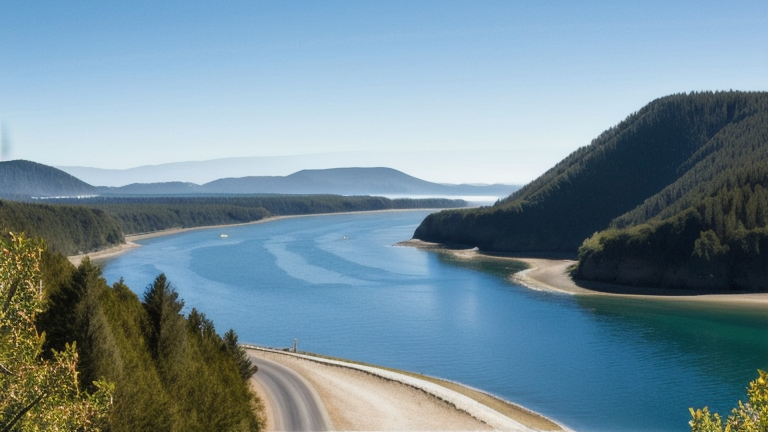
Kodiak is a coastal city on Kodiak Island, the largest island in the Kodiak Archipelago of Alaska, at coordinates 57.794136°N, 152.395283°W on the Gulf of Alaska. For submarine cable infrastructure, Kodiak is a key hub of the Alaskan domestic submarine cable network — two cables interconnect Kodiak with mainland Alaska and the Aleutian Islands, providing fibre connectivity to communities that have no terrestrial fibre alternative due to mountainous terrain and oceanic isolation.
Kodiak's role is exclusively domestic Alaskan: neither cable extends to the contiguous United States. International or Lower-48 connectivity for Kodiak depends on onward routing through other Alaskan landings (Whittier, Valdez, etc.) that host the long-haul Alaska United East and NorthStar systems.
Submarine cables landing in Kodiak
AU-Aleutian is a 1,491 km submarine cable in service since 2022, owned by GCI Communication Corp. From Kodiak it reaches 13 other Alaskan coastal communities along the Aleutian island chain — including Akutan, Chignik Bay, Cold Bay, False Pass, King Cove, Sand Point, Unalaska, and several smaller settlements. AU-Aleutian was deployed by GCI to provide modern fibre broadband to remote Aleutian communities that previously depended on satellite connectivity.
Kodiak Kenai Fiber Link (KKFL) is a 966 km submarine cable in service since 2007, owned by GCI Communication Corp. From Kodiak it reaches Anchorage, Homer, Kenai, Narrow Cape, and Seward — connecting the island to the principal urban centres of south-central Alaska. KKFL was the original modern fibre link bringing broadband connectivity to Kodiak Island from mainland Alaska.
Connection topology and redundancy
The two Kodiak cables are operated by the same operator (GCI) and serve complementary geographic functions: KKFL connects Kodiak inward to mainland Alaska (Anchorage, Kenai Peninsula), while AU-Aleutian extends outward into the Aleutian island chain. Together they make Kodiak a redistribution hub — traffic from the Aleutian communities reaches Anchorage via Kodiak, and Anchorage-bound traffic from Aleutian villages also routes through Kodiak.
The single-operator model (both cables GCI) means a major operator-level disruption would affect both systems simultaneously. However, the cables are physically distinct and serve different geographic routes, providing partial redundancy at the cable-level. For onward connectivity to the contiguous United States, Kodiak depends on AU-East and NorthStar systems landing at Whittier or Valdez via Anchorage backhaul.
Geography and coordinates
The Kodiak submarine cable landing sits at 57.794136°N, 152.395283°W (57°47'39"N, 152°23'43"W), on Kodiak Island in the Kodiak Archipelago of southern Alaska. The Gulf of Alaska access provides natural cable approach conditions, while the protected harbour environment of Kodiak supports the beach manhole infrastructure.
Frequently asked questions
What submarine cables land at Kodiak, Alaska?
Two submarine cables land at Kodiak: AU-Aleutian (RFS 2022, 1,491 km, GCI Communication Corp) and Kodiak Kenai Fiber Link KKFL (RFS 2007, 966 km, GCI Communication Corp).
What are the coordinates of the Kodiak cable landing?
Kodiak cable landing is at 57.794136°N, 152.395283°W (57°47'39"N, 152°23'43"W), on Kodiak Island in southern Alaska.
Which Alaskan locations connect through Kodiak?
Through AU-Aleutian, Kodiak connects to 13 Aleutian and Alaska Peninsula communities (Akutan, Chignik Bay/Lagoon/Lake, Cold Bay, False Pass, King Cove, Larsen Bay, Ouzinkie, Perryville, Port Lions, Sand Point, Unalaska). Through KKFL, Kodiak connects to Anchorage, Homer, Kenai, Narrow Cape, and Seward.
When was the first submarine cable laid at Kodiak?
The earliest documented Kodiak landing in the GeoCables dataset is Kodiak Kenai Fiber Link (KKFL), in service since 2007. AU-Aleutian followed in 2022.
Who operates the cables landing at Kodiak?
Both Kodiak cables are operated by GCI Communication Corp, the principal Alaskan domestic submarine cable operator.
What next: Kodiak, AK, United States in the global directory of cable landing points; see surrounding routes on the interactive submarine cable map or follow live network monitoring.
Other Landing Points in United States
Landing Point
- CountryUS United States
- Coordinates57.7941°N 152.3953°W
- Connected Cables2
See Real Cable Routes
View actual submarine cable routing from Kodiak, AK, United States - with backbone nodes, distance calculations, and latency estimates
Open Calculator →