Kardamena, Greece
Landing Point · GR Greece
Connected Cables
| Cable | Status |
|---|---|
| Thetis | Active |
Live Performance
RTT measurements to this landing point from 2026-03-05 through 2026-08-29 - live ICMP round-trip time via our monitoring probes. Recomputed daily. ✓ No anomalies detected in the monitored period.
Measurement sources
| Probe | Location | Samples | Avg |
|---|---|---|---|
| #1014969 own probe | Jerusalem IL | 14 | 98.6 ms |
| #6410 own probe | Sao Paulo BR | 10 | 259.9 ms |
| #6427 own probe | Sydney AU | 9 | 271.8 ms |
| #1015984 own probe | Balancer IL | 9 | 103.6 ms |
| #1014597 own probe | Tbilisi GE | 7 | 81.1 ms |
| #1015932 own probe | Odessa UA | 7 | 81.3 ms |
| #1014473 own probe | Minsk BY | 6 | 50.6 ms |
| #1014589 own probe | Almaty KZ | 5 | 108.8 ms |
| #1015313 own probe | Sevastopol UA | 2 | 127.8 ms |
| #1015523 own probe | Moscow RU | 2 | 62.4 ms |
About Kardamena, Greece
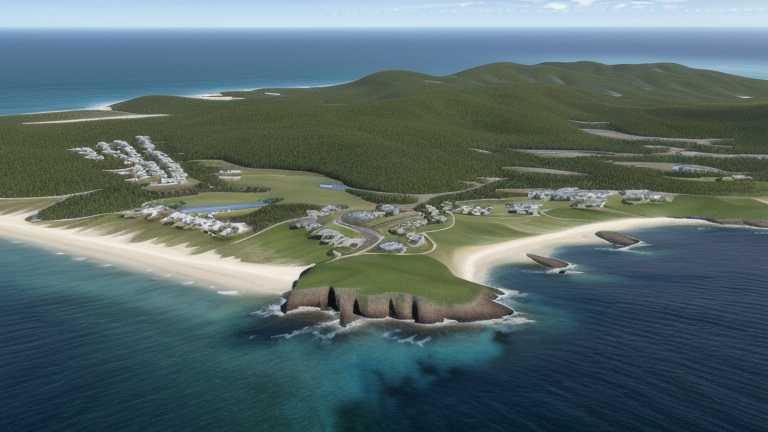
How the Internet Reaches Kardamena
Kardamena is a coastal settlement on the Greek island of Kos, situated in the southeastern Aegean Sea. As an island location within Greece, its international internet connectivity depends entirely on submarine cable infrastructure rather than terrestrial links to the mainland. International traffic reaching Kardamena arrives via the country's broader submarine cable network, with Kardamena itself serving as a terminus on a domestic Greek cable system.
Greece as a whole connects to the global internet through 13 submarine cables landing across 30 points along its coastline. Kardamena hosts a single cable landing — the Thetis cable — which links it to several other Greek island and mainland locations rather than to foreign countries. This makes Kardamena a node within a domestically focused cable, dependent on those interconnected Greek landing points for onward access to international traffic.
The Cable Serving Kardamena
The Thetis cable is a 660 km system that reached ready-for-service status in 2022, currently listed in draft status. It connects Kardamena to five other Greek landing points: Aethos, Agios Sostis, Baxedes, Ermoupoli, and Filizi — all within Greece. The cable does not extend to any foreign country, meaning its purpose is intra-Greek connectivity, linking Aegean island communities to one another and to the broader Greek national network rather than providing a direct international route.
Regional Context
Greece hosts 13 submarine cables across 30 landing points, with the first cable in service dating back to 1996 and an average cable length of 3,317 km across the country's international connections. Within that network, Kardamena is one of the smaller terminuses, served by a single cable focused on domestic island connectivity. Nearby Greek landing points carry significantly more infrastructure: Athens hosts 4 cables and Chania on Crete hosts 5, making them the primary hubs through which Greece connects internationally. Aethos and Agios Sostis, both also served only by the Thetis cable, sit in a comparable position to Kardamena as single-cable island termini.
What This Means for Connectivity
All submarine traffic entering and leaving Kardamena flows through the single Thetis cable. An outage on that cable would sever the location's submarine link entirely. Because Thetis connects only to other points within Greece, Kardamena's path to international internet traffic runs through those partner landing points — particularly wherever the Greek domestic network intersects with internationally facing cables at hubs such as Athens or Chania.
The Thetis cable illustrates a distinct layer of submarine infrastructure: short, domestically scoped cables that bind island communities into a national network, sitting beneath the longer international cables that carry traffic across continents and oceans. Understanding Kardamena's position clarifies how Greek island connectivity is structured — local submarine links feed into regional aggregation points, which in turn connect to the wider global internet.
What next: Kardamena, Greece in the global directory of cable landing points; see surrounding routes on the interactive submarine cable map or follow live network monitoring.
Other Landing Points in Greece
Landing Point
- CountryGR Greece
- Coordinates36.7829°N 27.1434°E
- Connected Cables1
See Real Cable Routes
View actual submarine cable routing from Kardamena, Greece - with backbone nodes, distance calculations, and latency estimates
Open Calculator →