Cape Ray, NL, Canada
Landing Point · CA Canada
Connected Cables
| Cable | Status |
|---|---|
| APOCS 1 | Active |
Live Performance
RTT measurements to this landing point from 2026-05-03 through 2026-07-31 - live ICMP round-trip time via our monitoring probes. Recomputed daily. ✓ No anomalies detected in the monitored period.
Measurement sources
| Probe | Location | Samples | Avg |
|---|---|---|---|
| #1014473 own probe | Minsk BY | 5 | 112.6 ms |
| #1015523 own probe | Moscow RU | 4 | 111.4 ms |
| #6427 own probe | Sydney AU | 3 | 162.5 ms |
| #6487 own probe | Singapore SG | 3 | 178.4 ms |
| #35641 | control probe | 2 | 50.5 ms |
| #60681 | control probe | 2 | 24.0 ms |
| #1014589 own probe | Almaty KZ | 2 | 172.4 ms |
| #1014597 own probe | Tbilisi GE | 2 | 142.7 ms |
| #1014969 own probe | Jerusalem IL | 2 | 131.0 ms |
| #1015498 | control probe | 2 | 37.7 ms |
| #1015563 own probe | Saint Petersburg RU | 2 | 101.1 ms |
| #1016031 own probe | Kyiv UA | 2 | 116.5 ms |
| #1015313 own probe | Sevastopol UA | 1 | 141.1 ms |
About Cape Ray, NL, Canada
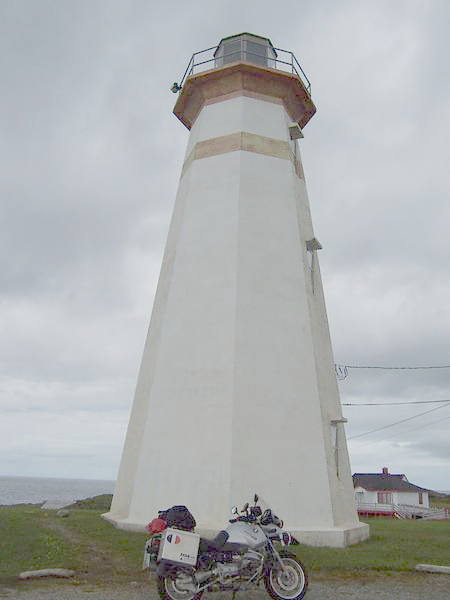
How the Internet Reaches Cape Ray, NL, Canada
Cape Ray is a headland at the southwestern tip of the island of Newfoundland, in the Canadian province of Newfoundland and Labrador. Its position at Newfoundland's southwestern extremity places it geographically close to mainland Canada across the Cabot Strait, and it is at this coastal point that submarine cable infrastructure connects Cape Ray to the broader internet. International and inter-regional internet traffic reaches Cape Ray through a single submarine cable that terminates here, making this a dedicated endpoint rather than a transit node along a larger multi-landing corridor.
The sole submarine cable serving Cape Ray links it directly to Sydney Mines, Nova Scotia — a relatively short crossing that bridges Newfoundland to mainland Canada. All external internet traffic flowing into or out of Cape Ray travels through this single connection.
The Cable Serving Cape Ray, NL, Canada
The APOCS 1 cable, which entered service in 1991, connects Cape Ray, NL to Sydney Mines, NS, both within Canada. This cable represents one of the earliest submarine cable deployments in Canadian infrastructure, with an RFS year of 1991. The route links Newfoundland's southwestern coast to Cape Breton Island in Nova Scotia, providing Cape Ray with its connection to the Canadian mainland and, through onward terrestrial and submarine networks, to the broader internet.
Regional Context
Canada hosts 18 submarine cables across 44 landing points, with an average cable length of 877 km and the first cable in service since 1991 — the same year APOCS 1 was commissioned. Cape Ray is one of the smaller, single-cable terminuses within this national network. Other landing points in Canada vary in their cable counts: Halifax, NS serves two cables, as do Kangiqsujuaq and Puvirnituq in Quebec. Several other Canadian communities, including Akulivik and Aupaluk in Quebec, are also served by a single cable, reflecting a pattern across Canada where more remote or smaller coastal communities rely on dedicated point-to-point submarine links rather than multi-cable hubs.
What This Means for Connectivity
With only APOCS 1 serving Cape Ray, all international and inter-provincial internet traffic from this location flows through that single cable to Sydney Mines, Nova Scotia. There is no submarine cable redundancy at this landing point — an outage on APOCS 1 would sever Cape Ray's submarine-based link to the mainland entirely. The cable's destination, Sydney Mines, NS, places Cape Ray's onward connectivity firmly within the Canadian east coast network, from which traffic can reach broader national and international routes.
Understanding Cape Ray's single-cable, intra-Canadian connection illustrates a broader pattern in how island and remote coastal communities in Canada receive internet connectivity — through targeted point-to-point submarine links rather than through the multi-cable corridors that serve larger urban hubs. This matters for mapping the resilience and topology of internet access across Newfoundland and the wider Atlantic Canadian region.
What next: Cape Ray, NL, Canada in the global directory of cable landing points; see surrounding routes on the interactive submarine cable map or follow live network monitoring.
Other Landing Points in Canada
Landing Point
- CountryCA Canada
- Coordinates47.6367°N 59.2847°W
- Connected Cables1
See Real Cable Routes
View actual submarine cable routing from Cape Ray, NL, Canada - with backbone nodes, distance calculations, and latency estimates
Open Calculator →