Alupang, Guam
Landing Point · GU Guam
2
Connected Cables
GU
Country
13.49°
Latitude
144.78°
Longitude
Ctrl + Scroll to zoom
Connected Cables
| Cable | Status |
|---|---|
| Asia Connect Cable-1 (ACC-1) | Planned |
| Bifrost | Active |
Live Performance
27
measurements
14
probes
141
days monitored
216.3
ms avg RTT
0
anomalies
RTT measurements to this landing point from 2026-04-15 through 2026-09-04 - live ICMP round-trip time via our monitoring probes. Recomputed daily. ✓ No anomalies detected in the monitored period.
Measurement sources
| Probe | Location | Samples | Avg |
|---|---|---|---|
| #6427 own probe | Sydney AU | 4 | 181.8 ms |
| #1014589 own probe | Almaty KZ | 4 | 347.8 ms |
| #6410 own probe | Sao Paulo BR | 3 | 286.4 ms |
| #6487 own probe | Singapore SG | 2 | 196.7 ms |
| #7062 own probe | Cape Town ZA | 2 | 326.7 ms |
| #7385 | control probe | 2 | 0.1 ms |
| #23039 | control probe | 2 | 0.9 ms |
| #60703 | control probe | 2 | 1.7 ms |
| #1014473 own probe | Minsk BY | 1 | 293.2 ms |
| #1014597 own probe | Tbilisi GE | 1 | 301.4 ms |
| #1014969 own probe | Jerusalem IL | 1 | 305.4 ms |
| #1015313 own probe | Sevastopol UA | 1 | 336.3 ms |
| #1015523 own probe | Moscow RU | 1 | 289.3 ms |
| #1015984 own probe | Balancer IL | 1 | 284.4 ms |
About Alupang, Guam
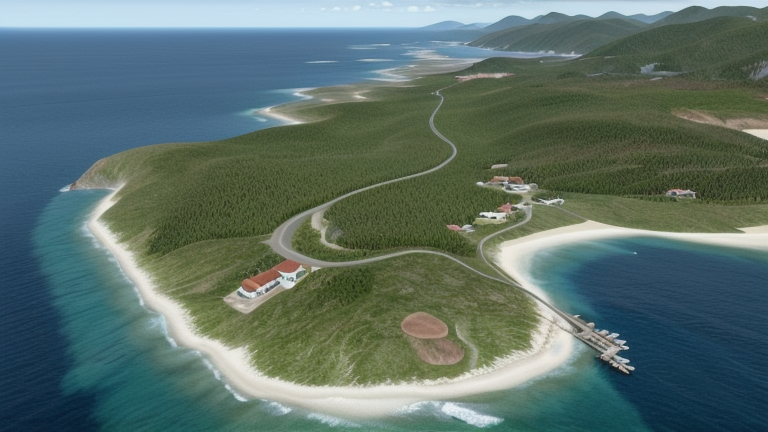
Alupang, Guam: A Rising Hub for Submarine Connectivity
Alupang, a coastal area in Guam, is quietly establishing itself as a key player in the island's submarine cable infrastructure. While it hosts only two cables-Bifrost and Asia Connect Cable-1 (ACC-1)-this landing point is part of a broader network that positions Guam as a strategic node in global telecommunications. With 19 submarine cables spread across five landing points, Guam has long been a critical waypoint for international data traffic in the Pacific.Connecting the Pacific and Beyond
The two cables landing at Alupang are long-haul giants. The Bifrost cable spans an impressive 19,888 km and is set to be ready for service (RFS) in 2025. It connects Guam to major hubs like Singapore, Indonesia, the Philippines, Mexico, and the United States, making it a key link for intercontinental data exchange. Similarly, the Asia Connect Cable-1 (ACC-1), expected to go live in 2028, stretches 19,000 km and links Guam to Australia, Timor-Leste, and other key locations in Southeast Asia and the United States. Together, these cables ensure that Alupang is not just a local landing point but a gateway to multiple continents.Positioning Alupang Among Guam's Landing Points
In the context of Guam's submarine cable infrastructure, Alupang ranks in the top 60% of the island's five landing points by cable count. While it may not have the density of cables seen at Piti (9 cables) or Tanguisson Point (6 cables), Alupang's connections are significant due to their international reach. Agat and Tumon Bay, like Alupang, host two cables each, but the specific cables landing at Alupang-particularly Bifrost-stand out for their role in linking Guam to diverse regions across the Pacific and beyond.Latency Insights: A Window Into Performance
GeoCables' proprietary latency measurements provide a unique perspective on Alupang's connectivity performance. With an average round-trip latency of 300 ms and a best-observed latency of 201 ms, Alupang demonstrates solid efficiency in handling data traffic. These numbers reflect the robust design of the cables landing here, ensuring reliable communication for both local and international users.Why Alupang Matters
Alupang’s submarine cable connections are not just about data-they represent a bridge between Guam and the world. While Guam’s economy relies heavily on tourism and military activity, its growing role as a telecommunications hub is increasingly important. The cables landing at Alupang enable seamless communication for businesses, government operations, and individuals across the Pacific. As new cables like ACC-1 come online, Alupang’s importance in the global network will only grow. Alupang may not yet rival the busier landing points in Guam, but its strategic connections and promising future make it a noteworthy part of the island’s telecommunications landscape.What next: Alupang, Guam in the global directory of cable landing points; see surrounding routes on the interactive submarine cable map or follow live network monitoring.
Other Landing Points in Guam
Landing Point
- CountryGU Guam
- Coordinates13.4900°N 144.7768°E
- Connected Cables2
See Real Cable Routes
View actual submarine cable routing from Alupang, Guam - with backbone nodes, distance calculations, and latency estimates
Open Calculator →
Submarine cables
🛤 Land fiber
Live probes