Wrangell, AK, United States
Landing Point · US United States
Connected Cables
| Cable | Status |
|---|---|
| Alaska United Southeast (AU-SE) | Active |
Live Performance
RTT measurements to this landing point from 2026-04-16 through 2026-08-02 - live ICMP round-trip time via our monitoring probes. Recomputed daily. ✓ No anomalies detected in the monitored period.
Measurement sources
| Probe | Location | Samples | Avg |
|---|---|---|---|
| #1014473 own probe | Minsk BY | 6 | 180.3 ms |
| #1015523 own probe | Moscow RU | 5 | 133.4 ms |
| #6427 own probe | Sydney AU | 3 | 179.6 ms |
| #7062 own probe | Cape Town ZA | 3 | 257.9 ms |
| #1014589 own probe | Almaty KZ | 3 | 208.6 ms |
| #1014597 own probe | Tbilisi GE | 3 | 172.2 ms |
| #1014969 own probe | Jerusalem IL | 3 | 158.0 ms |
| #1012538 | control probe | 2 | 88.4 ms |
| #1012541 | control probe | 2 | 64.9 ms |
| #1012542 | control probe | 2 | 79.9 ms |
| #1015563 own probe | Saint Petersburg RU | 2 | 139.9 ms |
| #1015313 own probe | Sevastopol UA | 1 | 164.4 ms |
| #1016031 own probe | Kyiv UA | 1 | 141.7 ms |
About Wrangell, AK, United States
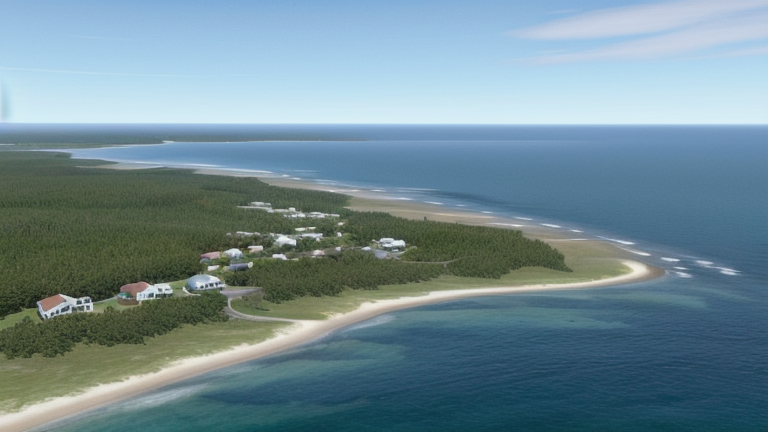
How the Internet Reaches Wrangell, AK
Wrangell is a small city on Wrangell Island in the Alexander Archipelago of southeastern Alaska, situated along the Inside Passage. As an island community, it has no overland connection to the broader continental telecommunications grid, making submarine cable infrastructure the direct means by which international and interstate internet traffic arrives.
That connection comes through a single submarine cable, the Alaska United Southeast (AU-SE), which links Wrangell to a chain of communities across the southeastern Alaska panhandle. Rather than connecting Alaska to overseas destinations, this cable operates as a regional intra-state system, stitching together island and coastal communities that would otherwise be isolated from the wider network.
The Cable Serving Wrangell, AK
The Alaska United Southeast (AU-SE) cable is 626 km in length and entered service in 2008. It connects Wrangell to five other Alaskan landing points: Angoon, Hawk Inlet, Juneau, Ketchikan, and Petersburg. All of these communities lie within the southeastern Alaska panhandle. The cable does not extend to the contiguous United States or any foreign country; it is a regional system serving the specific geographic needs of this archipelago corridor, where overland routes between communities do not exist.
Regional Context
The United States as a whole hosts 75 submarine cables landing across 119 points, with an average cable length of 5,553 km — reflecting the country's extensive transoceanic connections to Europe, Asia, Latin America, and the Pacific. Wrangell's single regional cable stands in sharp contrast to high-density American landing points such as Boca Raton, FL, and San Juan, PR, each served by six cables, or Kapolei, HI, served by five. Wrangell is one of several small southeastern Alaska terminuses on the AU-SE system, a cluster of closely spaced, community-serving landing points rather than a major international gateway.
What This Means for Connectivity
Because Wrangell is served by a single submarine cable, all of the city's external internet traffic flows through the AU-SE system. An outage on this cable would sever Wrangell's submarine link to the other communities on that route, including the regional hub at Juneau. There is no redundant submarine path available from this landing point.
The destinations reachable directly via AU-SE are entirely intra-Alaskan — Angoon, Hawk Inlet, Juneau, Ketchikan, and Petersburg — meaning that connectivity to the broader internet depends on onward links from those nodes, particularly Juneau, into the wider US network. Wrangell's place in the regional topology illustrates how submarine cables in remote archipelago settings function less as intercontinental links and more as essential local connectors between island communities that have no terrestrial alternative.
What next: Wrangell, AK, United States in the global directory of cable landing points; see surrounding routes on the interactive submarine cable map or follow live network monitoring.
Other Landing Points in United States
Landing Point
- CountryUS United States
- Coordinates56.4708°N 132.3838°W
- Connected Cables1
See Real Cable Routes
View actual submarine cable routing from Wrangell, AK, United States - with backbone nodes, distance calculations, and latency estimates
Open Calculator →