Ust-Bolsheretsk, Russia
Landing Point · RU Russia
Connected Cables
| Cable | Status |
|---|---|
| Far East Submarine Cable System | Active |
Live Performance
RTT measurements to this landing point from 2026-03-21 through 2026-09-07 - live ICMP round-trip time via our monitoring probes. Recomputed daily. ✓ No anomalies detected in the monitored period.
Measurement sources
| Probe | Location | Samples | Avg |
|---|---|---|---|
| #1014473 own probe | Minsk BY | 7 | 11.6 ms |
| #1014589 own probe | Almaty KZ | 7 | 67.3 ms |
| #1015523 own probe | Moscow RU | 6 | 1.6 ms |
| #6410 own probe | Sao Paulo BR | 4 | 366.2 ms |
| #7062 own probe | Cape Town ZA | 4 | 242.7 ms |
| #1014597 own probe | Tbilisi GE | 3 | 123.9 ms |
| #1014969 own probe | Jerusalem IL | 3 | 139.4 ms |
| #1015313 own probe | Sevastopol UA | 1 | 40.6 ms |
| #1015563 own probe | Saint Petersburg RU | 1 | 4.4 ms |
About Ust-Bolsheretsk, Russia
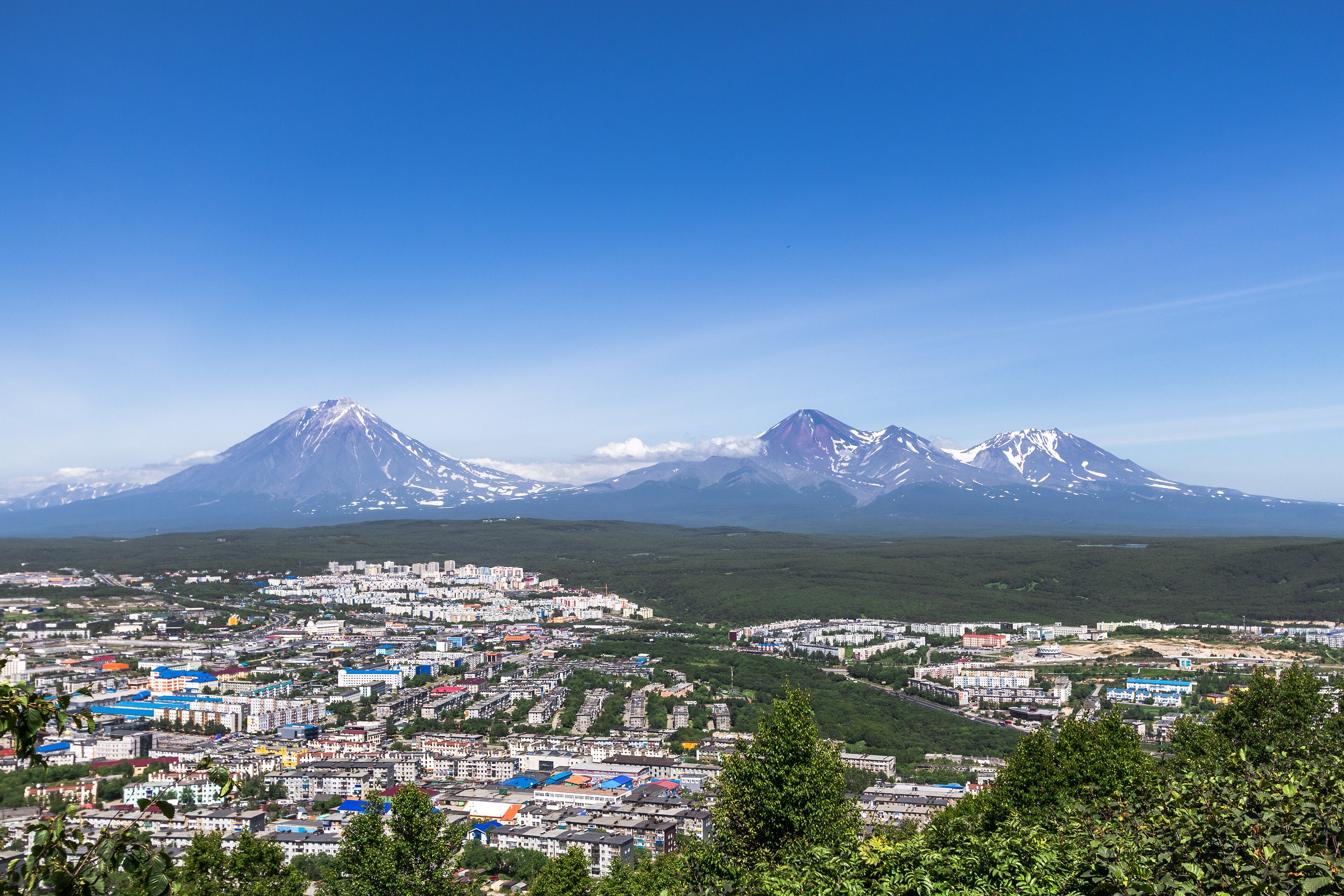
How the Internet Reaches Ust-Bolsheretsk
Ust-Bolsheretsk is a settlement in Russia located on the Kamchatka Peninsula in the Russian Far East. This remote Pacific-facing region sits far from the major population and infrastructure centers of western Russia, meaning international and long-distance internet connectivity depends directly on submarine cable links rather than overland fiber routes from Europe or central Russia.
International and interregional internet traffic reaches Ust-Bolsheretsk through a single submarine cable — the Far East Submarine Cable System — which lands at this point and connects it to two other Russian coastal locations. Ust-Bolsheretsk is one of three terminus points on this cable, making it a distinct landing station rather than a node along a broader multi-country corridor.
The Cable Serving Ust-Bolsheretsk
The Far East Submarine Cable System is a 1,855 km cable that entered service in 2016. It connects Ust-Bolsheretsk to Okha and Ola, both also in Russia. This cable does not reach foreign countries; instead, it functions as a domestic Russian submarine link, tying together remote Far Eastern settlements along the Russian Pacific coast. For Ust-Bolsheretsk, this cable provides the physical connection through which traffic travels to and from other points on the Russian network.
Regional Context
Russia hosts 12 submarine cables landing across 24 points, with an average cable length of 5,002 km — the first having entered service in 2000. Ust-Bolsheretsk, served by a single cable connecting only domestic Russian locations, represents one of the more modestly connected landing points in the country. Nearby regional peers on the Kamchatka Peninsula and surrounding areas are better served: Petropavlovsk-Kamchatsky, the peninsula's main city, lands 2 cables, as do Anadyr, Sovetskaya Gavan, Nahodka, and Ilyich. Each of those locations benefits from at least twice the cable redundancy available to Ust-Bolsheretsk.
What This Means for Connectivity
Because Ust-Bolsheretsk is served by a single submarine cable — and one that links only to other Russian locations — all of the settlement's submarine-carried traffic flows through the Far East Submarine Cable System to Okha or Ola. An outage on this cable would sever the submarine connection entirely, leaving the settlement dependent on whatever alternative terrestrial or satellite paths exist within Russia's broader network. There is no direct submarine route to any foreign country from this landing point.
The domestic nature of this cable reflects the geographic reality of Russia's Far East: widely dispersed coastal communities separated by vast distances require submarine links simply to connect to the rest of the national network. Understanding this single-cable, Russia-only configuration at Ust-Bolsheretsk illustrates how submarine infrastructure in remote regions often serves national integration first, before providing the international reach found at larger cable hubs.
What next: Ust-Bolsheretsk, Russia in the global directory of cable landing points; see surrounding routes on the interactive submarine cable map or follow live network monitoring.
Other Landing Points in Russia
Landing Point
- CountryRU Russia
- Coordinates52.8124°N 156.2871°E
- Connected Cables1
See Real Cable Routes
View actual submarine cable routing from Ust-Bolsheretsk, Russia - with backbone nodes, distance calculations, and latency estimates
Open Calculator →