Mijo-myeon, South Korea
Landing Point · KR South Korea
Connected Cables
| Cable | Status |
|---|---|
| Jeju-Mainland 3 | Active |
Live Performance
RTT measurements to this landing point from 2026-03-05 through 2026-07-15 - live ICMP round-trip time via our monitoring probes. Recomputed daily. ✓ No anomalies detected in the monitored period.
Measurement sources
| Probe | Location | Samples | Avg |
|---|---|---|---|
| #1014589 own probe | Almaty KZ | 9 | 193.7 ms |
| #1015523 own probe | Moscow RU | 7 | 177.2 ms |
| #6410 own probe | Sao Paulo BR | 6 | 312.5 ms |
| #6487 own probe | Singapore SG | 6 | 78.5 ms |
| #7062 own probe | Cape Town ZA | 6 | 369.9 ms |
| #1014473 own probe | Minsk BY | 3 | 202.1 ms |
| #1014597 own probe | Tbilisi GE | 3 | 334.9 ms |
| #1014969 own probe | Jerusalem IL | 2 | 312.5 ms |
| #20822 | control probe | 1 | 7.9 ms |
| #64216 | control probe | 1 | 4.1 ms |
| #1004371 | control probe | 1 | 8.8 ms |
| #1015313 own probe | Sevastopol UA | 1 | 229.1 ms |
About Mijo-myeon, South Korea
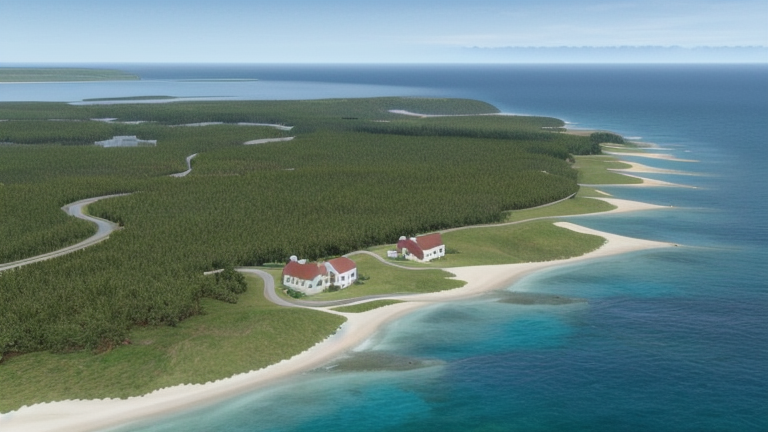
How the Internet Reaches Mijo-myeon
Mijo-myeon is a locality in South Korea, a country whose submarine cable network connects it to the broader global internet. South Korea hosts 14 submarine cables across 10 landing points, and Mijo-myeon is one of those landing points — serving as the terminus for a single domestic submarine cable rather than an international gateway. International internet traffic arrives in South Korea through major landing points elsewhere in the country and is then distributed domestically; Mijo-myeon's cable infrastructure is focused on linking the Korean mainland to Jeju Island.
The single cable landing at Mijo-myeon is the Jeju-Mainland 3, a domestic route connecting the South Korean mainland to Goseong-ri, another landing point also in South Korea. This makes Mijo-myeon a terminus on an inter-island domestic link rather than a node on any international submarine cable corridor.
The Cable Serving Mijo-myeon
The Jeju-Mainland 3 cable entered service in 2000 and spans 236 km. It connects Mijo-myeon on the South Korean mainland to Goseong-ri, South Korea, providing a domestic submarine route that carries traffic between the mainland and the surrounding coastal region. As a purely domestic cable, it links two South Korean landing points, meaning the traffic it carries travels entirely within the country rather than reaching foreign shores directly.
Regional Context
South Korea's submarine cable infrastructure is extensive, with 14 cables landing across 10 points and an average cable length of 9,233 km, reflecting the country's many long-haul international connections first established from 1996 onward. Within this network, Mijo-myeon is one of the smaller, more specialised landing points. Busan dominates the national picture with 8 cables, making it the primary international gateway in South Korea. Nearby Goseong-ri, which shares the Jeju-Mainland 3 cable with Mijo-myeon, hosts 3 cables in total, giving it greater connectivity than Mijo-myeon. Other regional peers such as Geoje, Goheung, and Gunsan each host a single cable, placing Mijo-myeon in a similar tier of single-cable domestic terminuses.
What This Means for Connectivity
With only one submarine cable landing at Mijo-myeon, all submarine-carried traffic through this point flows exclusively over the Jeju-Mainland 3. An outage on this cable would sever the submarine link between Mijo-myeon and Goseong-ri entirely, with no local cable redundancy. The destinations reachable directly via this cable are limited to the other South Korean landing point at Goseong-ri, meaning Mijo-myeon's submarine infrastructure is oriented entirely toward domestic, inter-coastal connectivity rather than international reach.
Understanding Mijo-myeon's position in South Korea's cable map illustrates how a country's submarine network is not uniformly international — some landing points exist solely to serve domestic routing needs, with international traffic relying on separate, better-connected hubs like Busan elsewhere in the national topology.
What next: Mijo-myeon, South Korea in the global directory of cable landing points; see surrounding routes on the interactive submarine cable map or follow live network monitoring.
Other Landing Points in South Korea
Landing Point
- CountryKR South Korea
- Coordinates34.7284°N 128.0274°E
- Connected Cables1
See Real Cable Routes
View actual submarine cable routing from Mijo-myeon, South Korea - with backbone nodes, distance calculations, and latency estimates
Open Calculator →