Mancora, Peru
Landing Point · PE Peru
Connected Cables
| Cable | Status |
|---|---|
| South America-1 (SAm-1) | Active |
Live Performance
RTT measurements to this landing point from 2026-03-02 through 2026-09-03 - live ICMP round-trip time via our monitoring probes. Recomputed daily. ✓ No anomalies detected in the monitored period.
Measurement sources
| Probe | Location | Samples | Avg |
|---|---|---|---|
| #1014589 own probe | Almaty KZ | 9 | 275.4 ms |
| #1014473 own probe | Minsk BY | 7 | 202.1 ms |
| #1014597 own probe | Tbilisi GE | 6 | 227.1 ms |
| #6410 own probe | Sao Paulo BR | 4 | 78.1 ms |
| #1014969 own probe | Jerusalem IL | 4 | 227.3 ms |
| #6487 own probe | Singapore SG | 3 | 323.1 ms |
| #7062 own probe | Cape Town ZA | 3 | 315.0 ms |
| #1015523 own probe | Moscow RU | 3 | 204.9 ms |
| #1015563 own probe | Saint Petersburg RU | 3 | 202.4 ms |
| #1011372 | control probe | 2 | 107.9 ms |
| #1016319 | control probe | 2 | 140.6 ms |
| #1008437 | control probe | 1 | 66.7 ms |
| #1008703 | control probe | 1 | 147.4 ms |
| #1015313 own probe | Sevastopol UA | 1 | 237.1 ms |
About Mancora, Peru
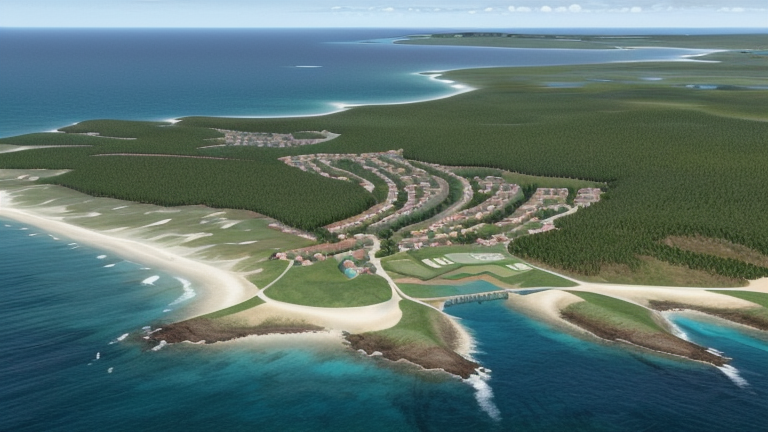
Mancora, Peru: Submarine Cable Landing Point
Mancora is a coastal locality in northwestern Peru that serves as a landing point for international submarine cable infrastructure. Situated along the Pacific coastline, it connects Peru to a broader network of South American and Caribbean nations through undersea fiber-optic cable. One submarine cable lands at Mancora, linking it directly to some of the most significant economies along both coasts of South America.
The cable landing at Mancora forms part of a pan-regional corridor that runs through multiple South American countries as well as the Caribbean. This positions Mancora as a point of entry for international connectivity along Peru's northern Pacific coast, complementing other landing infrastructure found elsewhere in the country.
Cables Landing at Mancora, Peru
South America-1 (SAm-1) is a submarine cable system stretching 25,000 kilometers, which reached ready-for-service status in 2001. The cable connects Mancora, Peru with a broad set of countries across the region: Argentina, Brazil, Chile, Colombia, the Dominican Republic, and Ecuador. This extensive routing means SAm-1 traverses both the Pacific and Atlantic coasts of South America, as well as reaching into the Caribbean via the Dominican Republic. As one of the foundational long-haul submarine cable systems deployed in South America at the turn of the millennium, SAm-1 established direct undersea links between Peru's northern coast and major population and economic centers throughout the continent.
Regional Context
Within Peru, Mancora is one of at least two known submarine cable landing points, alongside Lurin, which hosts three submarine cables. Lurin therefore represents a larger concentration of cable infrastructure within the country, while Mancora serves as a secondary but distinct landing point on the northern Pacific coast. Together, these two locations distribute Peru's submarine cable connectivity across different stretches of its coastline.
Network Role
Mancora functions as a single-cable terminus, with South America-1 as its sole submarine cable connection. Through SAm-1, the landing point participates in a wide regional corridor that spans the western and eastern seaboards of South America, linking Peru northward to Colombia and Ecuador, southward to Chile and Argentina, eastward to Brazil, and into the Caribbean via the Dominican Republic. This range of connections means that Mancora, despite hosting only one cable, contributes to a genuinely intercontinental routing path rather than a purely local or inter-island link.
In the broader South American submarine cable graph, Mancora's role is defined by SAm-1's legacy as one of the earliest large-scale systems to integrate the continent's Pacific and Atlantic cable corridors. Its presence on Peru's northern coast ensures that connectivity along this stretch of the Pacific seaboard is not exclusively concentrated at the country's other landing point further to the south.
What next: Mancora, Peru in the global directory of cable landing points; see surrounding routes on the interactive submarine cable map or follow live network monitoring.
Other Landing Points in Peru
Landing Point
- CountryPE Peru
- Coordinates4.1540°S 81.0538°W
- Connected Cables1
See Real Cable Routes
View actual submarine cable routing from Mancora, Peru - with backbone nodes, distance calculations, and latency estimates
Open Calculator →