Hawk Inlet, AK, United States
Landing Point · US United States
Connected Cables
| Cable | Status |
|---|---|
| Alaska United Southeast (AU-SE) | Active |
Live Performance
RTT measurements to this landing point from 2026-05-13 through 2026-06-07 - live ICMP round-trip time via our monitoring probes. Recomputed daily. ✓ No anomalies detected in the monitored period.
Measurement sources
| Probe | Location | Samples | Avg |
|---|---|---|---|
| #1014473 own probe | Minsk BY | 2 | 158.7 ms |
| #1015523 own probe | Moscow RU | 2 | 131.9 ms |
| #6427 own probe | Sydney AU | 1 | 264.2 ms |
| #7062 own probe | Cape Town ZA | 1 | 262.9 ms |
| #1014589 own probe | Almaty KZ | 1 | 237.2 ms |
| #1014597 own probe | Tbilisi GE | 1 | 175.6 ms |
| #1014969 own probe | Jerusalem IL | 1 | 158.3 ms |
| #1015932 own probe | Odessa UA | 1 | 149.9 ms |
About Hawk Inlet, AK, United States
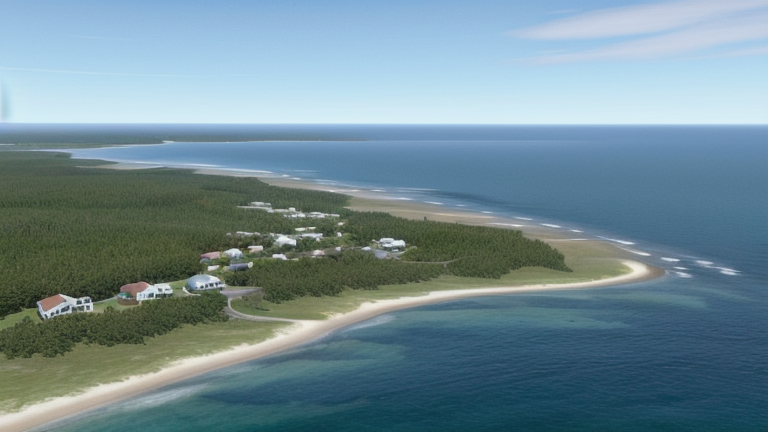
How the Internet Reaches Hawk Inlet, AK
Hawk Inlet is a small community on Admiralty Island in the Alexander Archipelago of Southeast Alaska, a region defined by deep fjords, forested islands, and coastal isolation. This geography makes overland connectivity impractical, and submarine cable infrastructure becomes the direct means by which international and interregional internet traffic reaches the community. Rather than connecting to a distant transoceanic hub, Hawk Inlet sits on a regional intra-Alaska cable system designed specifically to link the scattered coastal communities of the Southeast Alaska panhandle.
International internet traffic ultimately arrives at Hawk Inlet through the Alaska United Southeast (AU-SE) cable, which ties this landing point into the same network serving several other Alaskan towns along the same route. This is a single-cable terminus: there is no redundant submarine path serving Hawk Inlet independently.
The Cable Serving Hawk Inlet
The Alaska United Southeast (AU-SE) cable spans 626 kilometres and entered service in 2008. Rather than crossing an ocean, this cable runs entirely within Alaska, connecting a chain of Southeast Alaskan coastal communities. Its landing points include Angoon, Juneau, Ketchikan, Petersburg, and Sitka, all in Alaska. Hawk Inlet is one node along this regional corridor, meaning its internet traffic shares the same physical cable infrastructure that serves those neighbouring towns. Juneau, as the state capital and the largest city on the cable, functions as the primary gateway through which onward connectivity to the continental United States is reached.
Regional Context
The United States hosts 75 submarine cables across 119 landing points, with an average cable length of 5,553 km — reflecting the country's dominant role in transoceanic internet infrastructure. Hawk Inlet sits at the opposite end of that scale: it is among the smallest and most locally focused landing points in the country, served by a single short intra-regional cable rather than a multi-cable transoceanic hub. By comparison, landing points such as Boca Raton, FL, and Kapolei, HI, each serve four to six cables with intercontinental reach. The AU-SE cable itself is notably shorter than the national average, underscoring its purpose as a community connectivity link rather than a long-haul international route.
What This Means for Connectivity
All submarine-delivered internet traffic to Hawk Inlet flows through a single cable, the Alaska United Southeast. An outage on that cable would sever the community's submarine link entirely, with no alternative submarine path available. The destinations directly served by this cable are all Alaskan — Angoon, Juneau, Ketchikan, Petersburg, and Sitka — making this a fundamentally intra-Alaska, inter-community network rather than an intercontinental one. Wider internet access depends on onward connectivity from those hubs, particularly Juneau, out to the broader United States network.
Hawk Inlet's position on the AU-SE cable illustrates an important dimension of regional internet topology: in remote island and coastal environments, submarine cables serve not only international traffic but also the basic task of connecting dispersed local communities to one another and to the national network.
What next: Hawk Inlet, AK, United States in the global directory of cable landing points; see surrounding routes on the interactive submarine cable map or follow live network monitoring.
Other Landing Points in United States
Landing Point
- CountryUS United States
- Coordinates58.1281°N 134.7418°W
- Connected Cables1
See Real Cable Routes
View actual submarine cable routing from Hawk Inlet, AK, United States - with backbone nodes, distance calculations, and latency estimates
Open Calculator →